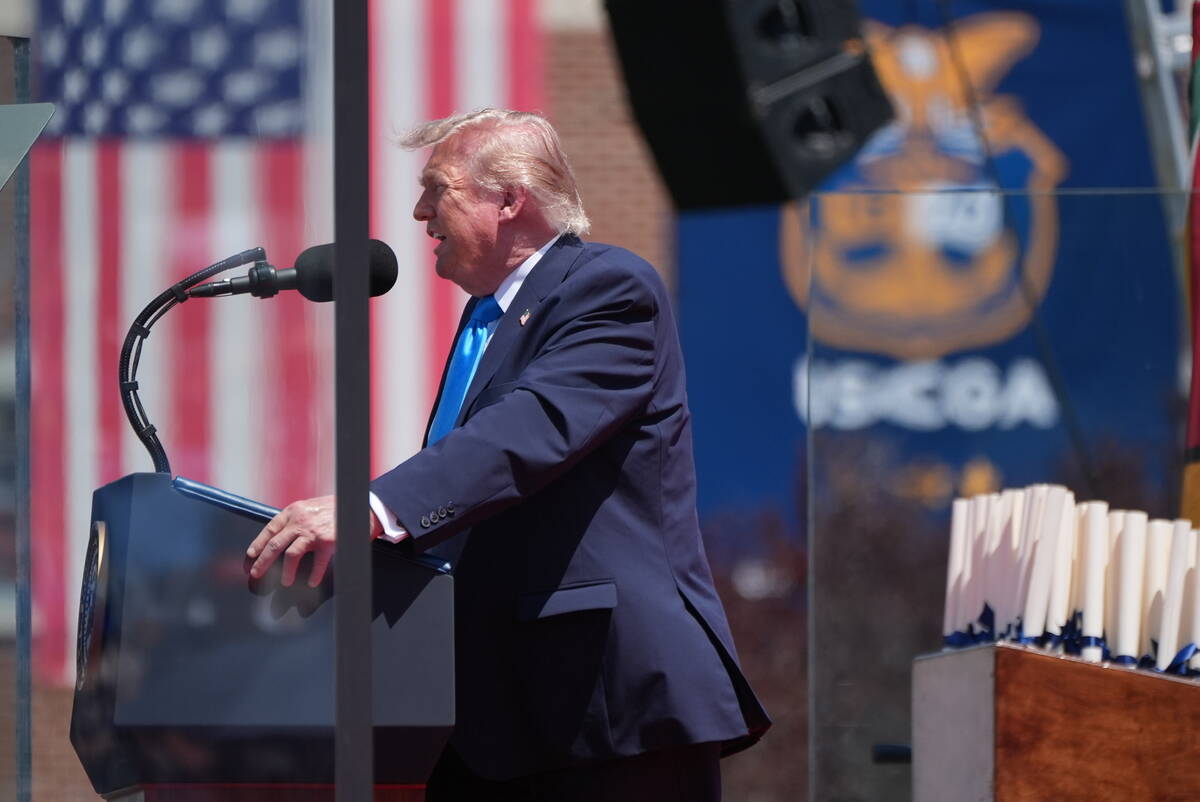
President Donald Trump isn’t manipulating Republican voters. He’s empowering them to do something they’ve long wanted — elect strong conservatives, not fake ones.
On Tuesday, Rep. Thomas Massie, R-Ky., lost his primary to a Trump-endorsed candidate, Ed Gallrein. In recent years, Massie morphed from a principled, limited-government advocate into an anti-Trump gadfly. He was one of only two House Republicans to vote against the One Big Beautiful Bill, which funded ICE and cut taxes, among other provisions. He started spouting nonsense about Israel. He wrongly insinuated that Trump was compromised by the Epstein files.
He isn’t the only Trump opponent who’s recently gone down to defeat. Sen. Bill Cassidy, R-La., recently finished third in his primary despite outspending his opponents. In 2021, Cassidy voted to impeach Trump over the Jan. 6 Capitol riots. After opposing a redistricting plan Trump wanted, five Indiana incumbent state senators lost to Trump-backed opponents.
Defeating a single incumbent in a primary — let alone several in different states — is difficult. What Trump has done is an impressive display of political power. But the propaganda press is misreading what actually happened.
“Trump flexes grip over GOP with Massie’s defeat in Kentucky,” Bloomberg wrote.
“Cassidy loses his primary in Louisiana, as Trump vanquishes another GOP foe,” The New York Times said.
“Trump exacts revenge in Indiana over redistricting vote,” NBC News reported.
These headlines make Republican voters appear to be little more than pawns Trump used to fulfill his personal vendettas.
But this perspective misreads why Trump succeeded. For decades, Republican voters have been frustrated by party leaders who sound conservative only in the months leading up to a primary election. After winning their primaries, they run and govern from the center or left. They are called RINOs, which stands for Republicans in Name Only.
Republican voters despise RINOs as a category but have long struggled to defeat them in individual primaries. Special-interest lobbyists often support these RINOs, which helps them outraise their opponents. They hire talented consultants who know what rhetoric will resonate with conservative voters.
This disconnect led directly to Trump’s ascension. After the 2012 presidential election, the GOP establishment was in a panic. It believed Republicans’ poor showing among minority voters would doom the party without a major course correction. Its postelection autopsy urged Republicans to “embrace and champion comprehensive immigration reform.” That’s amnesty.
In response, Trump tweeted in 2013. “Does the RNC have a death wish?”
At that point, party leaders weren’t listening to him. In 2013, the “Gang of Eight” amnesty bill passed the Senate with more than a dozen Republicans voting “yes.” The bill died after House Speaker John Boehner refused to bring it up for a vote.
Now, that was an example of Republican leadership attempting to strong-arm Republican voters and pass something the base despised. Things such as this have happened repeatedly, especially with social issues.
Understanding this reveals the real story of these primary defeats. Trump isn’t controlling GOP voters. He’s using his platform and political organization to point them where they were already trying to go. No wonder Republican voters love Trump so much.
This means there’s a simple way for Republican incumbents to avoid losing in a primary — keep your promises to Republican voters. No wonder the Republican establishment hates Trump so much.
Contact Victor Joecks at vjoecks@reviewjournal.com or 702-383-4698. Follow @victorjoecks on X.