There is no such thing as curses. The same goes for jinxes and spells.
Even Oz the Mentalist got exposed this week in an absolutely stunning development (Though seriously, his willful ignorance of the magician’s code is pretty disappointing if the reporting is accurate, and it certainly seems to be.)
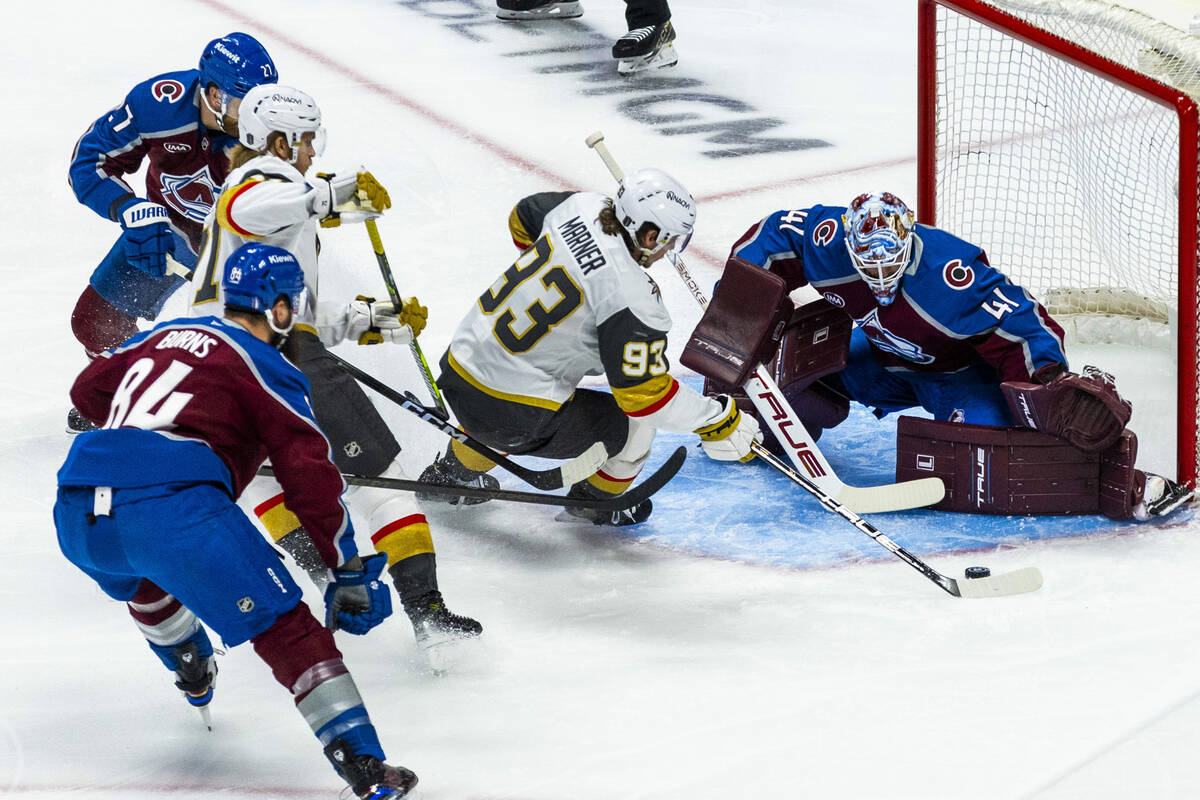
But after falling behind 2-0 in the Western Conference Final against the Vegas Golden Knights, the Colorado Avalanche have once again sparked discussion of the infamous Presidents’ Trophy curse as the league’s best team all year long is in serious jeopardy of not making the Stanley Cup final.
Again.
Let’s get the obvious out of the way. The teams with the league’s best record are not coming up short in the playoffs because of some bizarre spiritual intervention.
In fact, the No. 1 overall seed in the NHL playoffs has won the title more than any other seed.
It’s just very hard to win in the postseason.
There’s a great deal of parity in the NHL and teams naturally go through up-and-down swings, so any stretch of poor play or bad luck for a couple games in the postseason are magnified, especially when the competition is going to be the best of the best each night.
A goaltender can steal a game or two here and there and completely change the dynamic of a series. Fluky plays can also be magnified significantly in a best-of-seven series as opposed to an 82-game schedule.
“There’s such a fine margin for error between winning and losing,” Colorado coach Jared Bednar said. “You have to keep chipping away at the margins of the game to try to win it.”
Then-Sports Illustrated columnist and current Golden Knights employee and broadcaster Darren Eliot spoke about it all the way back in 2010.
“It is the reality of the sport,” he said more than 15 years ago in brushing off the idea of a curse. “If your particular strength happens to be that you’re really good offensively, and you come up against a hot goaltender and a team that is stout defensively, it might not matter that you were good on a nightly basis scoring goals. And that one particular opponent: you’ll have to beat them four times.”
Not much has changed since Eliot said that. Only the Chicago Blackhawks in 2013 followed up a Presidents’ Trophy-winning regular season by hoisting the Stanley Cup in the same year since then, becoming just the second team to do it in the salary cap era.
Only one other team since 2010, the Vancouver Canucks in 2011, even made the Stanley Cup Final.
Of the 39 teams that have secured the most points in the regular season since the Presidents’ Trophy was established, just eight of them have also won the Stanley Cup.
The Avalanche was one of those teams, however. They claimed both trophies in the 2001-02 season.
Colorado has led the regular season in points on two other occasions in the Presidents’ Trophy era. It lost the conference final to Detroit in 1997 and dropped a second-round series to the Knights in the COVID-shortened 2021 campaign.
The Avalanche, who join the 1996 Red Wings and 2007 Sabres as Presidents’ Trophy winners to go down 2-0 in the conference finals, are hoping to avoid a similar fate this year in what was a uniquely special regular season in which they scored more goals than any team in the league and allowed the least. By a significant margin.
They followed that up by going 8-1 in the first two rounds of the playoffs and scoring the most goals per game of any team in the postseason.
Then, in the span of 48 hours, Colorado went from clear favorite to win it all to battling overwhelming historical trends showing they are likely to be yet another dominant regular-season team to fall short in the postseason.
“Obviously, it changes quick,” Colorado goaltender Scott Wedgewood said. “You just bank in a seven-game series on finding a way to get the next one. That’s the playoffs. It’s not an easy script. Nothing is set in stone or predicted or prepared.”
Especially for Presidents’ Trophy winners.
“These guys have put in a lot of hard work into this year, and it started with the day we lost last year. I feel like we’ll fight to the bitter end,” Bednar said. “You’re not giving up on your season because you lost two games in the playoffs.
“There’s still lots of hockey to be played.”
And that’s how the series will ultimately be decided. On the ice.
Not some shadow realm of dark magic.
Contact Adam Hill at ahill@reviewjournal.com. Follow @AdamHillLVRJ on X.